Musical AI: the consent and attribution layer for generative music.
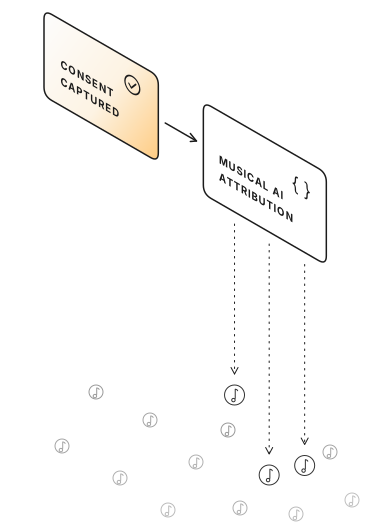
Rights holders establish what their catalog is cleared to do with AI. AI companies attribute and license what they generate. One platform, both sides of the deal.
Rights holders establish what their catalog is cleared to do with AI. AI companies attribute and license what they generate. One platform, both sides of the deal.
Trusted by Industry Leaders




Before an AI deal can pay anyone, someone has to say yes. Musical AI captures affirmative consent across sound recording, composition, and voice, then keeps a live inventory of what each work is cleared to do.
It is the step that comes first, and the one rights holders ask for before anything else.
EXPLORE CONSENT →Musical AI operates downstream of generation, at the output boundary. No access to model internals, no changes to training pipelines, no exposure of proprietary IP.
For every output, it produces proportional, evidence-linked attribution that holds up in an audit. By integrating, AI companies inherit trust already established with rights holders and publishers, and become a counterparty deals can close around.
Per-output attribution records
Proportional influence aligned with licensing terms
Evidence-linked results that stand up to audit
Musical AI is priced per attribution event. Costs scale with generation volume, not catalog size or revenue, with clear commit and overage mechanics. Finance can model attribution as a known unit cost, not an open-ended liability.
Your teams will want to engage Musical AI when:
Attribution requirements surface late in the pipeline
Existing tooling can’t explain influence at output scale
Internal builds start competing with core ML roadmap work
Request a technical
conversation