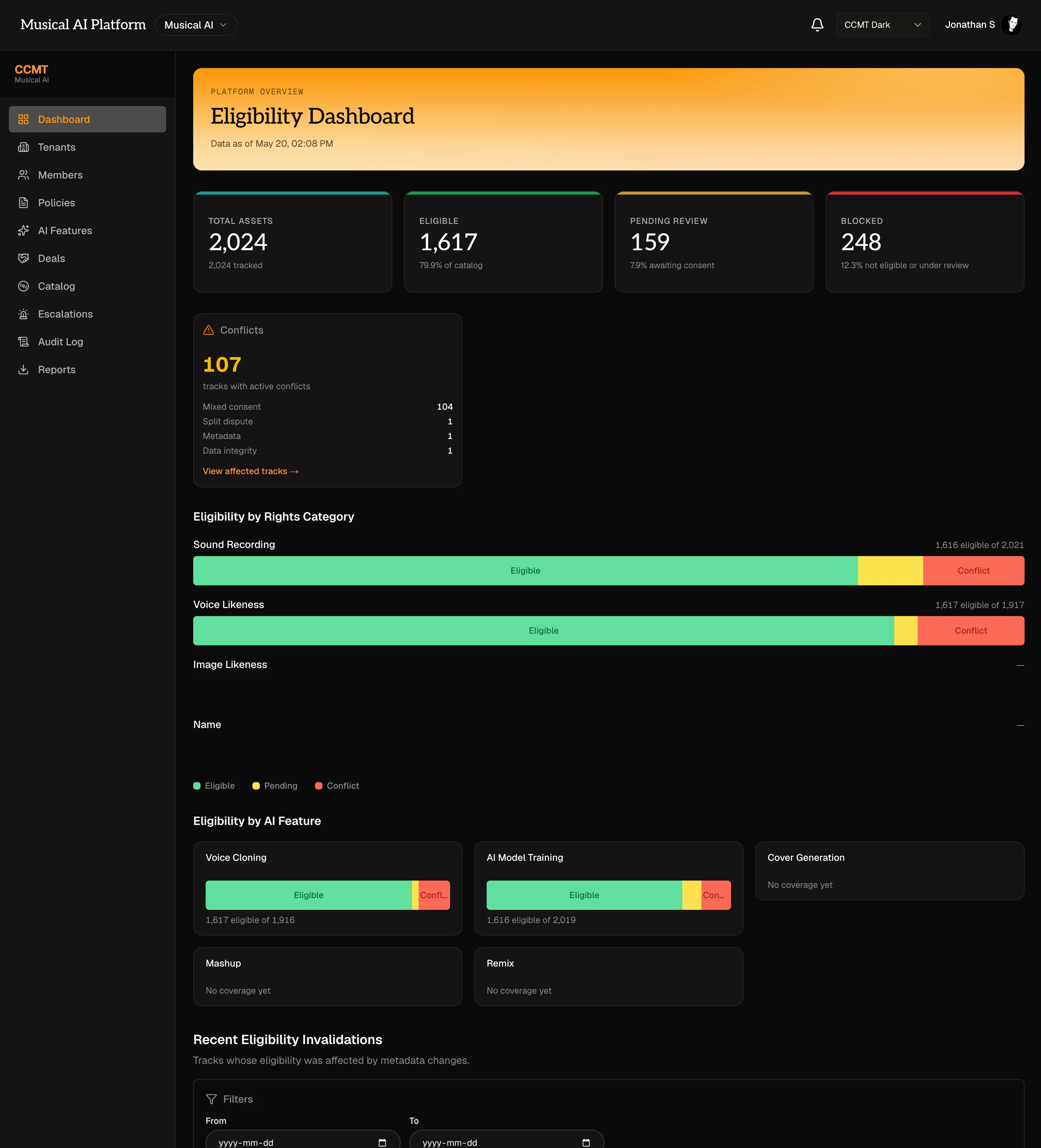
Your inventory of opportunity for AI partnerships

Rights infrastructure was built around restriction: what is off limits, who has objected. AI partnerships need the opposite. Now what matters is knowing what every controlling contributor has actively said yes to.

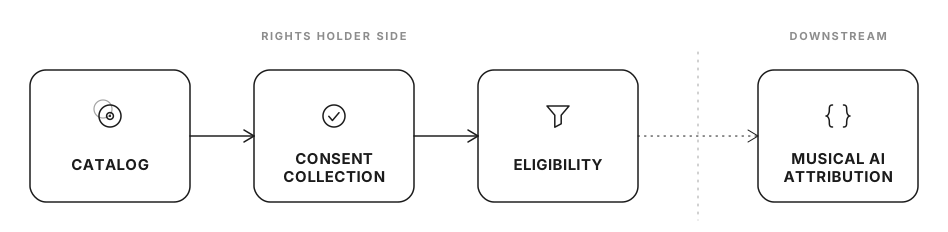
Musical AI captures that consent and maintains it as a continuous inventory of what the catalog is cleared to do.
Built for the question AI partnerships are asking

Built for the question AI partnerships are asking

Rights systems were built to track objection. AI partnerships require the inverse: documented affirmative opt-in from every controlling contributor before a deal can move. Musical AI operates on the rights holder side of that boundary, where consent originates.

Every contributor, every feature, every rights category

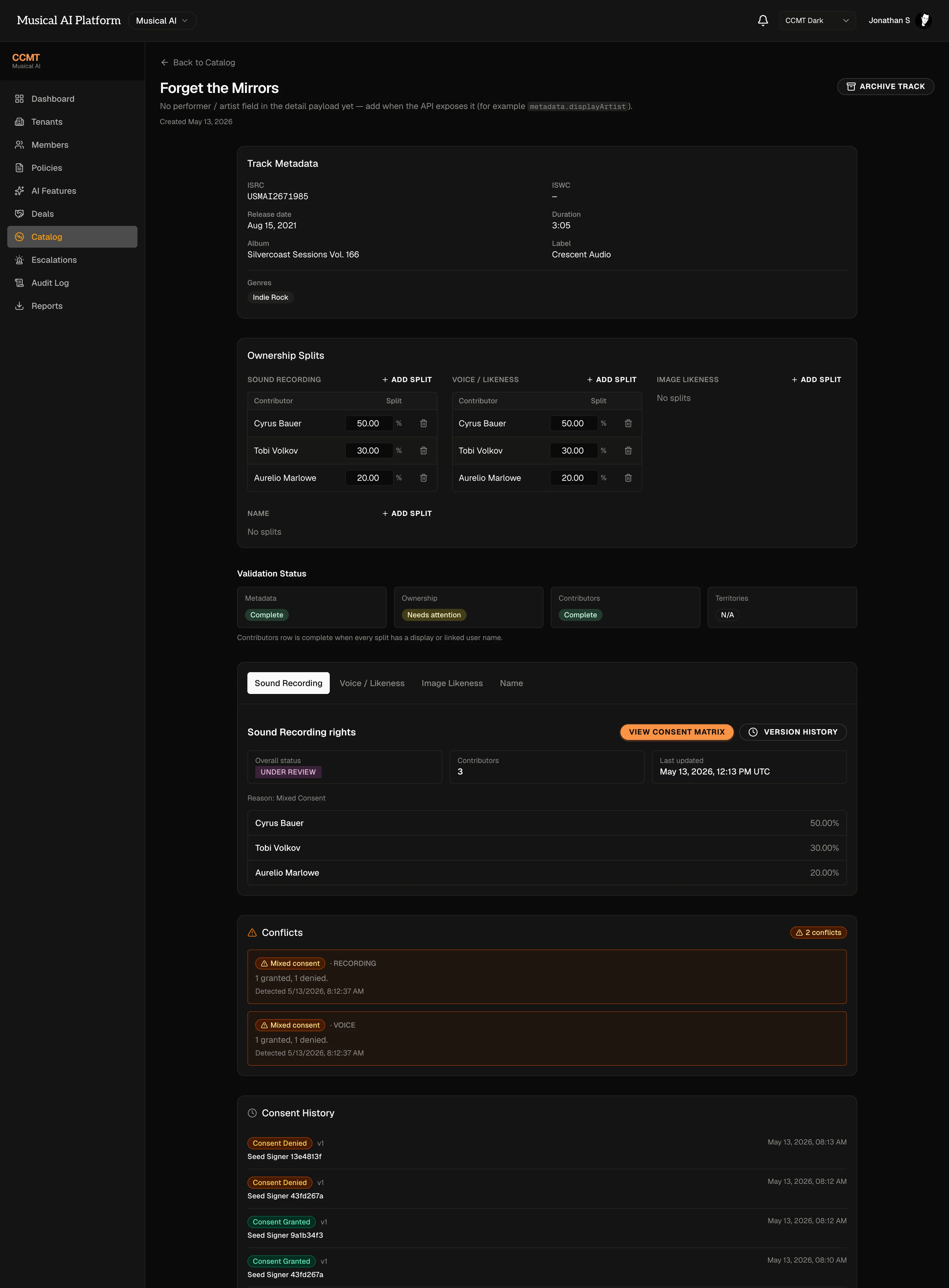
Sound recording, composition, and voice are tracked as independent consent tracks, with eligibility computed separately for each, because that is how the underlying agreements work.

Built to stand up to scrutiny

Every consent action, revocation, and policy version is captured with MFA, identity verification, and non-repudiation, and recorded with a timestamp and a signature. The result is a defensible record of how every work reached its current state.

Designed for how catalogs actually move

Splits get corrected, contributors get added, ownership shifts as deals close. Musical AI treats every metadata change as an event that recomputes eligibility, so the picture stays accurate without manual reconciliation.

What we don't do

Musical AI captures and computes consent state. We do not enforce it against AI companies, mediate disputes, interpret contracts, or determine compensation. Contested cases route to rights management for human resolution.

When catalog consent becomes a deal constraint, we should talk.

A short conversation is usually enough to determine fit.

Request a conversation

Request a conversation